Building a Personal Cannabinoid Toolkit: How to Layer Hemp Compounds for Your Wellness Goals
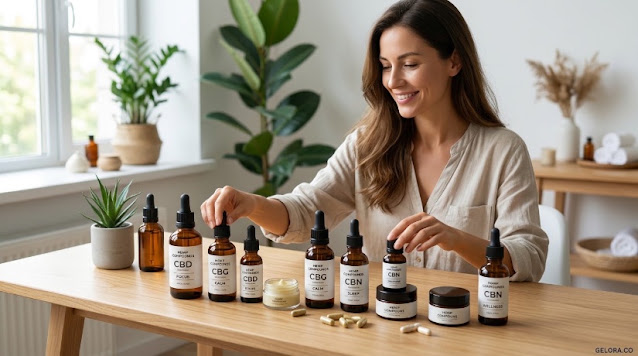
Most people discover hemp products by accident — a friend recommends something for sleep, or they stumble across a CBD tincture at a market stall. What fewer people realize is that the individual compounds found in hemp each carry their own distinct character, and learning to combine them thoughtfully can make a meaningful difference in how you feel day to of it less like taking a supplement and more like assembling a small toolkit. Different tools for different jobs.
What Are Cannabinoids, Anyway?
Hemp contains dozens of naturally occurring compounds called cannabinoids. You have probably heard of CBD. But there is a whole family beyond it — THCA, CBG, CBN, and others — each interacting with the body in its own are not interchangeable, and they are not competing. Used together, they tend to complement each other in what researchers and enthusiasts often call an “entourage effect” — the idea that the compounds work better in combination than in isolation.
Here is a practical look at the ones most worth knowing.
THCA: The Raw, Unheated Compound
THCA is the acidic precursor to THC, found abundantly in fresh and minimally processed hemp flower. In its raw form it behaves quite differently from what most people associate with who incorporate THCA into their routines often do so for its reported support around inflammation and physical recovery. Athletes, people with physically demanding jobs, and anyone who spends a lot of time on their feet tend to find it interesting for daytime use.
The key detail: THCA converts to THC when exposed to heat. So whether you experience a psychoactive effect depends entirely on how it is consumed. Raw or cold preparations keep it in its original form.
CBD: The Familiar Foundation
CBD has earned its reputation for good reason. It is broadly well-tolerated, non-intoxicating, and versatile enough to fit almost any wellness it tends to shine is in supporting a general sense of calm without sedation. Many people use it as a daily baseline — something taken consistently rather than reactively. It pairs well with most other cannabinoids because it does not overpower them.
If you are new to building a cannabinoid toolkit, CBD is almost always the sensible starting point. It gives you a foundation to layer other compounds on top of, so you can notice more clearly what each addition is doing.
CBN: The Evening Compound
CBN has a quieter profile than CBD or THCA, and it has attracted attention specifically for its association with relaxation and sleep is typically found in aged hemp or produced through deliberate processing. Compared to CBD, it tends to feel more sedating — which makes it less ideal for mornings but quite useful in the hours before bed.
A common pattern among experienced users: CBD through the day, a small amount of CBN in the evening. This simple rhythm respects the body’s natural shift from activity to rest without forcing anything.
CBG: The Early Riser
CBG is sometimes called the “mother cannabinoid” because many other cannabinoids are synthesized from it during the plant’s growth cycle. By the time hemp reaches harvest, CBG is present in relatively small quantities — which historically made it expensive to source. That has changed as cultivation methods have who gravitate toward CBG often describe it as energizing and clarifying. It seems to support focus and a sense of mental sharpness, which makes it a natural fit for morning routines or periods of concentrated work.
Pairing CBG with CBD is increasingly popular for exactly this reason: the grounding quality of CBD alongside the lift of CBG, without the jitteriness that comes with caffeine.
Delivery Methods Matter as Much as the Compounds
You cannot talk about cannabinoid layering without addressing how you consume these compounds, because delivery method changes and oils offer relatively quick absorption and easy dose control — ideal for daily routines where consistency matters. Capsules are slower but longer-lasting, which suits people who want background support through a full day or night.
Concentrates and hash sit in a different category. Because they are dense in cannabinoids, small amounts go a long way. They appeal to people who have moved past the basics and want more precision in how they experience specific compounds. Hash in particular has a long history across cultures as a concentrated, craft-oriented form of hemp consumption.
The format you choose should match your intention. High-concentration products are not inherently better — they are just different tools, suited to different situations.
How to Start Building Your Own Toolkit
The most common mistake is trying to optimize everything at once. A better approach:Start with a single compound and a consistent routine. Give it two to three weeks before drawing conclusions. Then introduce one variable at a time — a new compound, a different delivery method, a different time of day.
Keep notes. Not elaborate journals, just brief daily check-ins. Over a few weeks, patterns emerge that you would never notice otherwise.
For people curious about exploring a range of hemp compounds in one place, the Hurcann shop at offers a wide selection including flower, hash, concentrates, and individual cannabinoid products — useful if you want variety without juggling multiple suppliers.
One Last Thought
There is no universal cannabinoid toolkit. What works brilliantly for a friend might feel like nothing to you, and that is not failure — it is just biology. The endocannabinoid system is individual, and the compounds that interact with it are correspondingly value of understanding THCA, CBD, CBN, and CBG is not that you will find the perfect formula immediately. It is that you will make better decisions faster, because you understand what each element is actually for.
Start simple, pay attention, and adjust from there.