

























































BANDA ACEH – A lyric becomes easier to evaluate when it is attached to melody, phrasing, and a believable arrangement.
AI music tools now offer several ways to reach that point: some generate a complete vocal song, some specialize in voice transformation, and others create the instrumental foundation that a singer or producer can finish.
Choosing well depends on whether the project begins with words, a vocal identity, or a production brief.
AISong and MakeSong are the most complete lyric-to-song choices in this group. Musicfy stands out for custom and licensed AI voice workflows. Loudly offers detailed control over instrumental production and exports, while Boomy gives beginners a quick route into original music and optional vocal additions.
How We Assessed Lyrics and Vocals
This list prioritizes the relationship between words and performance. We examined whether a tool can accept original lyrics, turn them into intelligible phrasing, support a distinct vocal direction, and place that voice inside a coherent arrangement. Instrumental-only services remain relevant when they create enough space and structure for a singer to finish the record elsewhere.
A useful test begins with the same lyric but changes the desired delivery: restrained verse, stronger chorus, clear diction, and an intentional instrumental break. We then consider whether the creator can revise the voice, arrangement, or backing track without abandoning the whole draft. Rights are part of the workflow too, especially for uploaded recordings and voice models, so authorized source material is a baseline requirement.
AISong
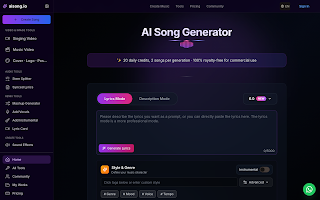
AISong homepage
Lyrics and Vocal Workflow
For lyric-centered work, an AI Song Maker is useful only if the words become a believable performance. AISong builds vocals, melody, arrangement, mixing, and mastering around either supplied lyrics or a written idea, allowing the writer to hear pacing and emotional emphasis immediately. Its lyric and audio utilities also help when a line needs rewriting, a vocal needs removal, or stems are required for a cleaner production handoff.
Production Options
Paste a clearly formatted lyric and describe the vocalist’s energy, tone, and relationship to the listener. Mark the section where the delivery should open up, then compare generations for diction and phrasing before judging polish. If the chorus lands but a verse feels crowded, revise the syllable count or arrangement request instead of assuming the vocal model alone caused the problem.
Best Fit
AISong is a strong fit for lyricists who need melody and performance to expose strengths and weaknesses in the text. It also helps creators prepare a complete vocal reference for singers, collaborators, or clients. The workflow works best when the writer is willing to edit generic phrases after hearing how they occupy musical time.
MakeSong
MakeSong homepage
Lyrics and Vocal Workflow
Make Song lyrics perform naturally with MakeSong’s lyric-to-song workflow. The service also supports description-to-song creation, with instructions for style, mood, tempo, vocal direction, and section structure. Explicit verse, chorus, bridge, intro, and outro labels help protect the narrative sequence and show where a repeated hook should return.
Production Options
Format the lyric before choosing production details. Keep section labels consistent, decide whether the bridge changes perspective, and note any instrumental space needed between dense passages. Then specify the vocal character and genre in concrete terms. Listening back should answer whether the lyric breathes naturally; if it does not, adjust line length and section contrast before adding more decorative prompt language.
Best Fit
MakeSong suits lyric-first creators who think in sections and want the generated arrangement to respect that map. It is useful for demos, educational songwriting exercises, and early vocal references where structure matters as much as surface sound. Producers can later rebuild the instrumentation while retaining the timing and dramatic plan established in the draft.
Musicfy
Musicfy homepage
Lyrics and Vocal Workflow
Musicfy combines full-song generation with a strong emphasis on AI voices. It can create songs from a mood, genre, or idea, accept original lyrics, produce instrumental loops and backing beds, convert uploaded vocals, and train a custom voice model on eligible plans.
Production Options
Creators can first decide whether the project needs a newly generated song or a voice transformation. For song generation, define the musical direction and lyrics; for voice work, upload or record clean audio and select an appropriate licensed or self-trained voice. Stem and vocal-cleanup tools help prepare material for later mixing.
Best Fit
Musicfy is most relevant when vocal identity is central to the experiment. It can support character concepts, vocal demos, parody-style creative work with appropriate rights, or tests using a creator’s own trained voice. Users should choose voices they are authorized to use and confirm the license attached to the plan.
Loudly
Loudly homepage
Lyrics and Vocal Workflow
Loudly offers text-to-music generation and a parameter-based Music Generator. Creators can set genre, energy, instruments, structure, BPM, key, and duration, then download complete tracks, stems, or samples and continue refining the result with remixing, effects, and mastering tools.
Production Options
For repeat content, start with a reusable musical brief that specifies the edit length and intensity changes. Generate several directions, compare how each supports the visuals, and refine the preferred track in Studio. Audio Clips can also incorporate a short original recording into new variations while controlling how closely the generation preserves it.
Best Fit
Loudly fits video teams, advertisers, podcasters, and creators who need music matched to a specific format. Its parameter controls are useful when exact duration, tempo, or energy matters more than generating a lyric-led song, and its export options support handoff to an editor or producer.
Boomy
Boomy homepage
Lyrics and Vocal Workflow
Boomy is designed to make original music approachable for first-time creators. The core flow asks the user to choose a style and optional settings, then returns several song options that can be saved, rejected, or customized through accessible editing controls.
Production Options
The most productive approach is to treat the first output as a musical starting point. Try contrasting styles, keep the version with the best groove, and personalize it before download. Creators can also add custom vocals or experiment with the platform’s Auto-Vocal feature after saving a song.
Best Fit
Boomy is a practical entry point for people who have never arranged a track. Its low-friction interface favors quick experimentation over detailed production control, so it works best for learning what styles and structures appeal to you before moving into a deeper editing workflow.
How to Choose the Right Tool
Use AISong when the priority is hearing lyrics, melody, vocals, and arrangement together with minimal setup. Choose MakeSong when section labels and production instructions are central to the brief. Musicfy is the better specialist when the voice itself is the creative focus. Loudly is suited to creators who want producer-style control over an instrumental and plan to add vocals later. Boomy offers the simplest starting point for a first song experiment.
Voice tools require particular care. Use your own voice, an authorized model, or a voice whose license clearly covers the project. For commercial work, verify the current plan terms before distribution and keep a clean copy of the original lyrics and vocal recordings.
Final Recommendation
AISong ranks first when the goal is to hear words, vocals, and arrangement as one complete song. MakeSong is best for lyricists who want section labels and performance direction to shape the form. Musicfy becomes the specialist choice when voice transformation or a permitted custom model is central, Loudly serves producers building a controlled backing track, and Boomy offers the easiest entry point for beginners. Choose according to which element still needs to become audible: the lyric, the voice, or the production.
















































Beri Komentar