


























































MaxConnectionsPerChild / MaxRequestsPerChild
The number of requests a single Apache child process can handle equals a cumulative total on the child server across all threads it controls. Each request handled by a thread counts toward this limit to its parent. Once the child server has reached its limit, the child is then recycled.
This directive is a stop-gap for accidental memory leaks. Some code executed through Apache threads may contain memory leaks. Leaked memory are portions of memory that subprocess failed to release properly, so they are inaccessible to any outside processes. The longer a leaking program is left running, the more memory it will leak. Setting a MaxConnectionsPerChild limit is a specific method for assuring Apache is periodically recycling programs to reduce the impact of leaked memory on the system. When using external code handlers like Mod_fcgid, PHP-FPM or mod_lsapi, it becomes necessary to set MaxConnectionsPerChild to 0 (unlimited), doing so prevents periodic error pages caused by Apache terminating threads prematurely.

As a rule of thumb, if the server encounters a memory leak never set the MaxConnectionsPerChild / MaxRequestsPerChild too low, instead start with 10,000 and reduce it incrementally.
MPM Prefork Optimization
This MPM Prefork section details the use and performance considerations for various directives when running this module. This MPM is a non-threaded multi-processor designed for compatibility. It consists of a single Apache parent process, which is used to govern all new Apache processes also known as children. The following directives show how Apache is capable of performance tuning when using MPM Prefork. Unlike Worker based MPMs, optimizing MPM Prefork is generally simple and straightforward. There is a 1:1 ratio of Apache processes to incoming requests. However, MPM Prefork does not scale well with hardware and the more traffic it encounters, the more hardware it will need to keep up with the pace. It should be noted that some directives behave differently based on which MPM is loaded. The information provided in this section is only the portion about MPM Prefork.
MaxRequestWorkers / MaxClients
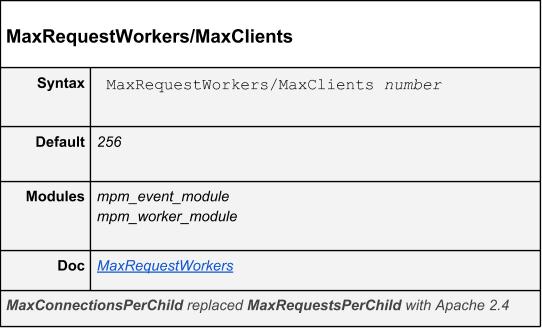
Used to control the upper limit of children that the Apache parent server is allowed to have in memory at one time. These children (also called workers) handle requests on a 1:1 ratio. This translates into the maximum number of simultaneous requests the server can handle.
If this directive is too low, Apache under-utilizes the available hardware which translates to wasted money and long delays in page load times during peak hours. Alternatively, if this directive is too high, Apache outpaces the underlying hardware sending the system into thrashing (link to thrashing article) scenario which can lead to server crashes and potential data loss.




















































Beri Komentar