

















































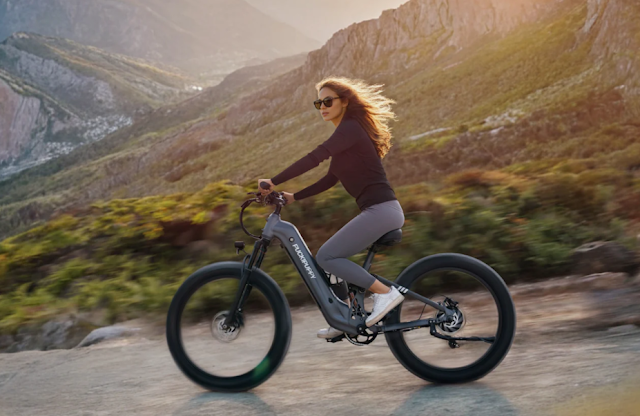
Fast e-bikes are moving beyond the image of a bicycle with extra motor assistance. For a growing group of riders, they now occupy a space between conventional commuter bikes and heavier motorised vehicles: quicker over longer distances, capable on more varied terrain, yet still built around the familiar form of a bicycle.That does not mean top speed is the only reason riders are paying attention. The real shift is happening because faster e-bikes are combining stronger motors with larger batteries, better brakes, wider tyres and more capable suspension systems.
In other words, performance is becoming a complete package rather than a single number on the display.
Why Are Riders Looking for Faster E-Bikes?
For many riders, speed matters because their trips are becoming longer and more varied.
A basic commuter e-bike may work perfectly for a short ride to the office or a nearby shop. But someone travelling across a larger suburban area, climbing regular hills or combining paved roads with rougher surfaces may want stronger acceleration and a higher assisted cruising speed.
That difference becomes noticeable on longer journeys. An e-bike that maintains momentum comfortably can reduce the effort required to cover open stretches of road and make a 15- or 20-mile ride feel more practical.
Performance-oriented riders may also use the same bike for different purposes during the week. A weekday trip could involve paved streets, while a weekend ride may include gravel roads, park access routes or uneven trails.
This wider range of use is one reason fast e-bikes are developing into a category of their own. Buyers are no longer asking only whether an e-bike can assist them. They are asking how well it performs when the ride becomes longer, steeper or less predictable.
Does Motor Power Determine How Fast an E-Bike Feels?
Motor output influences acceleration and climbing support, but wattage alone does not define performance.Two e-bikes with similar rated motor power can feel very different depending on controller tuning, battery voltage, gearing, wheel size and how assistance is delivered.

Peak power is useful during moments of higher demand, such as starting on an incline or maintaining momentum up a climb. Smooth power delivery, however, may matter even more in everyday riding.
A bike that produces strong assistance abruptly can feel difficult to manage around traffic, corners or narrow paths. A well-tuned system should provide enough support without making low-speed control unnecessarily difficult.
Banda Aceh

Kota Langsa

Aceh Selatan
Aceh Tenggara
Bali

Banten
Bengkulu
DI Yogyakarta
Jakarta Pusat
Jambi
Kalimantan Barat
Kalimantan Selatan
Kalimantan Timur

Kalimantan Utara
Kalimantan Tengah
Lampung
Nusa Tenggara Barat
Palu
Pangkal Pinang
Riau
Sumatera Selatan
Sumatera Utara
Sumatera Barat
Kepulauan Bangka Belitung
Kepulauan Riau

Jawa Barat
Jawa Tengah
Jawa Timur













































































Komentar Terbaru